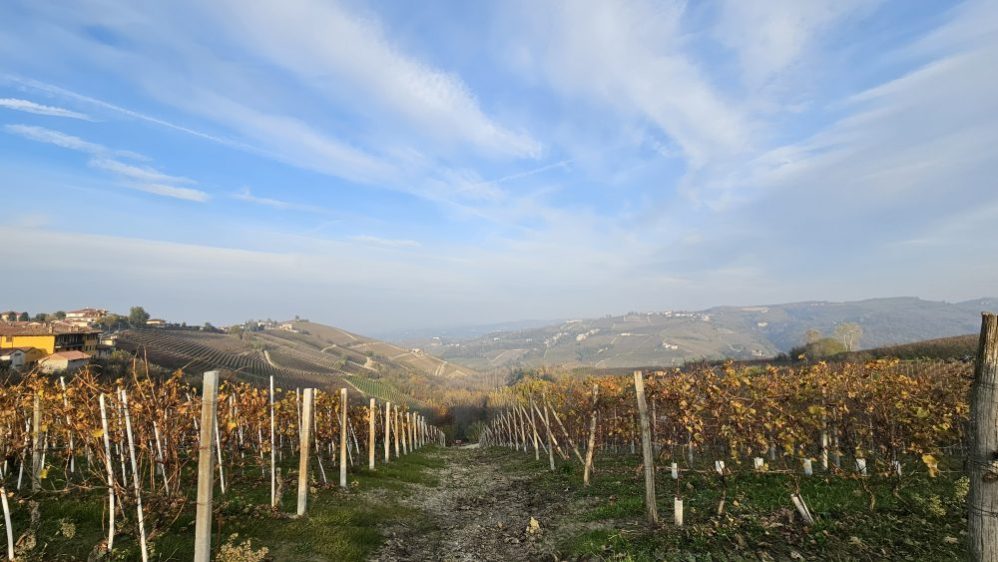
Piemonte and the vineyards of the Langhe region have long enchanted me. Watching YouTube videos of endless rolling vineyards hugged by la nebbia (fog), a climatic feature of the Langhe, this has been on my bucket list for a while. After Burgundy and Bordeaux, it was time for Barolo.
But before I get into my itinerary over the five days in the Langhe, a little bit about the diva Nebbiolo which is the varietal in Barolo.
Barolo is known as the Wine of Kings, the King of Wines. Well, that’s what they say because Barolo was the choice drink for the House of Savoy monarchy. The same monarchy that was the mastermind behind the unification of Italy starting in 1861 and ruled the Kingdom of Italy until 1946. Turin was the first capital of unified Italy from 1861-1865 before the capital was moved to Florence.
Exacting Standards Fit for a King.
Barolo is the Wine of Kings but why is it known as the King of Wines? Because just like its French counterpart, Burgundy (how dare I compare, I hear some Bourgogne lovers protesting), Barolo is a single grape wine made from a finicky varietal that shines the brightest in its homeland. In this case, the thin-skinned, early budding but late ripening Nebbiolo. Just like Pinot Noir, the wines produced appear light, but unlike Pinot Noir, Nebbiolo is a trickster. Don’t let the pale colour which can often veer quickly from ruby to garnet fool you; get your tongue ready for some of the grippiest tannins you will find! Hence the long ageing rules to help soften these austere tannins.
Nebbiolo is the only grape that is used to make Barolo and his queen, Barbaresco. And you are only able to name the wine as a Barolo if it comes from one of the 11 designated areas (communes). Plus, there are strict rules in the wine-making process as well; Barolo needs no less than 38 months of ageing while a Barolo Riserva needs 62 (!) months before release.
So if it’s 2024 and you’re presented with a “standard” Barolo 2022, that’s pretty suspect. This is one of the longest ageing requirements in Italy and the wines develop evocative aromas both from large-oak (traditionally) and bottle ageing. Truffles, tar, earth, leather and spice add to the red fruit and roses aromas.
The fact that there are strict rules in the viticulture process also ensure the quality of a Barolo wine, fit for a king. There are restrictions on harvest quantities per hectare and rules on altitude and aspect.
Similar to Pinot Noir in Burgundy, Nebbiolo is “terroir-expressive”. And just as the Burgundians love to regale us with how a plot fifty metres away produces distinctly different wines, so will the Piemontese. While the soils are mostly marl and sandstone, they vary across the Langhe (more varied than in Burgundy) and I’m really not that much of a geologist geek to be able to describe them. I just know, for example, that the Barolo from La Morra is gentler while Serralunga D’Alba produces more powerful examples.
There is more to the Langhe than Barolo and Barbaresco and all the places we visited but since we had just five days, we centred around those two and Alba, La Morra, Neive and Treiso.
Our Itinerary in the Langhe:
Day 1 (La Morra, Alba):
An hour’s drive from Turin to La Morra for a winery visit and lunch. As lunch was at 12.30pm, we didn’t have much time to take a gander round the village centre but stumbled upon a cool exhibition Oenological Metonymies by Elia Sampo where he presents conceptual illustrations on the world of wine. It was in a church so that made it even cooler.


Next was the visit to La Marrone. The cellar visit was rather brief where amazingly, the host jumped right into showing us the lees on the white wines, assuming that we had a fair amount of wine knowledge. Which we do, thanks to our WSET certifications but still, it was a bit of a jump if someone wanted the basics of Piemonte wines explained.
After the short visit, we had lunch, a good introduction to what was to come over the next few days. Had my first taste of my new favourite pasta, tajarin, made with 40 egg yolks or something like that and also tried the 2013 Bussia, akin to a cru in French winespeak.


It is a Must to Visit Paolo Scavino!
Next was one of the best wine tasting experiences I’ve had. At Paolo Scavino, one of the legends of Barolo. The host had so much passion, it was an in-depth tour and explanation of the viticulture and vinification processes, the Scavino plots and a generous tasting (think we had six wines). We had a pleasant surprise when we realised it was all complimentary (no wonder I couldn’t find the price of tasting online). Amazing, considering other places charged upwards of 25€ for a tasting of 3-4 glasses of their introductory range.


We walked out with the Bric del Fiasc (87€), we liked it that much. Barolo needs its time in bottle, so maybe we’ll wait another 10 years.
Our Accommodation in Alba:
Then, it was off to our home for the next three nights. Maison Alice was perfect, convenient location with a private, free parking spot available. It’s an apartment suite with a kitchenette, dining area, living room with a couch large enough should you wish to kick out a snoring partner.


Dinner: Osteria Moderna. Booked this for their Alba White Truffle tasting menu. It was my first truffle meal in Alba, the place has good reviews, so went for the 110€ 4-course menu. Great start to white truffle dining!


Day 2 (Barolo):
It’s a 20-minute drive from Alba to Barolo town. Or village, more like. If you’re after a really quiet stay for a couple of nights, stay in Barolo. Otherwise stay in Alba or somewhere like Neive, there are more restaurants for your dinners and shops, as well.
But yes, of course, we are in Barolo so there’s still that feeling of being somewhere special, even though I have mentioned that there are 11 communes that fall under the Barolo DOCG so I guess “special” is relative.
We did not have any bookings to visit wineries, figuring we would drop into enoteche to try wines. Some have the wine dispenser system going where you can try a range of wines, including super-premium Barolo from the best cru for say, 15€ for a tasting portion. It sounds like a lot but considering that if you want to taste the higher tier wines at a winery, they may charge you 50€, this is okay. Especially if you’ve already had a detailed and informative and generous cellar visit like I had at Paolo Scavino and you don’t exactly want to spend an hour listening to the producer’s production style and soils and sustainability efforts and so on…and you just want to taste!


Half a day is what I would suggest in Barolo, unless you made specific arrangements to visit a winery. For lunch, we walked in to Osteria La Cantinella. Lucky to have snagged the last couple of seats. It’s a cosy vibe and I had more of the Barolo-braised veal.
Other than Barolo, I found myself mostly drinking the easy-going Barbera during my Piemonte trip. Because my husband was not drinking (he had lost his sense of smell and taste at the start of the trip, how sad for him!), I stuck to ordering by the glass and found the selection of Barolo by the glass to be limited, featuring youngish wines and I’d rather have a young Barbera than a young Barolo.


Dinner: La Piola. Back in Alba, we strolled around the shopping street, then off to dinner at La Piola, smack in “town”. Most good restaurants in Alba offer a truffle menu during the season but we skipped this round. I did get my second dose of tajarin, though. I love it that much!


Day 3 (Alba White Truffle Fair):
This was pretty much spent at the fair, I’ve written up a separate post with tips of visiting the Alba White Truffle Fair, so check that out. After a few hours at the fair, once again, we just relaxed in our apartment, then had dinner.
Dinner: Ape Wine Bar. After one too many tajarin and truffle dishes, we decided to go for steak! I thought it would be a casual wine bar but it turned out to be a relatively fancy place. We had a lovely last stroll in Alba after, that’s the Cattedrale di San Lorenzo, near where La Piola and Ape are located.


Day 4 (Barbaresco, Neive):
Checked out of Maison Alice and headed off to Barbaresco, just a 15min drive from Alba. Like Barolo, Barbaresco is made from 100% Nebbiolo grapes. However, it has less grippy tannins, less time ageing and can be consumed younger. Still, the dried flowers, cherries, spice, earth, leather notes as it ages will be evident.

The Tower of Barbaresco would have been a fun place to enjoy a tipple on the panoramic terrace but it was too cold to sit out so we just circled the tower, looking at the mini exhibition of winemakers from the area. The man in the middle is Angelo Gaja, and he is pretty much credited as the person responsible for pinning Barbaresco on the world map.


We then strolled into a church which is the home for the Enoteca Regionale del Barbaresco for a fabulous tasting. The staff are friendly, you pay a little and get to taste wines with the actual winemakers. We tasted with the woman you see in the last picture above, Daniela, of Cascina Rabaglio. That’s her husband and brother in the picture. It’s all very cosy and familial! We ended up buying two bottles below.


Dinner: Naevia. With its glossy website, the venue matched those vibes as well. In a tiny town like Neive, this restaurant appeared more formal than what I might have expected, but all good. I had freshly shaved white truffle on my pasta, costing me 7€ per gram…I had to tell the server to stop when he reached four grams!


Day 5 (Neive, Treiso):
After our lazy, long breakfast at our B&B, we strolled around Neive.


We considered driving to Asti, but decided to head to Treiso instead; a smaller, sleepier wine town where we walked among the naked vines, save for a few rejects, which we boldly plucked and tasted.


We almost didn’t make it for lunch anywhere; it was well past 2pm when we started looking at places to eat and many were having last orders. Luckily, Osteria Le Rocche let us in and we had a nice change from my favourite tajarin, having the other classic Piemontese pasta, the plin with veal sauce. Husband had something comforting, a dumpling soup! We asked the staff what else we could do in Treiso, and he said not much but suggested the gorge (rocche) and that was quite the magnificent sight indeed.

It is noteworthy that for such a teeny town, there is a Michelin-starred restaurant Ciau di Tornavento. We did not think of heading to Treiso initially, but if we had planned, we would have stopped by for a meal.
Dinner: L’Aromatario: This ranked high in online searches. The only issue was that they only accepted booking via phone calls, so I figured we’d just try our luck while in Neive. (We had a reservation elsewhere that we cancelled when we managed to get a booking). I decided to have a Barolo and Pinot Noir side by side to compare. It was our last dinner in the Langhe and was a great end to our Piemontese gourmand adventure!


Our Accommodation in Neive:
We spent two nights in Neive, we wanted a change in scenery and Neive is close to the other big name in the Langhe, Barbaresco. All the accommodation we had picked for this trip (Milan, Turin, Alba and Neive) were spot on but this had the nicest atmosphere. We pretty much had the whole grounds to ourselves (there are a few suites in Casa Caimotta, we had the largest one on the ground floor) and we enjoyed beautiful sunset views over the vines. We were there in winter so the pool was unused but there’s that option. One of the best parts was the full-on breakfast that the lovely host, Giorgia prepared each morning, baby in tow!


It’s Not Just About the King and the Queen.
On a final note, there’s more to Piemonte wines than Barolo and Barbaresco. As I mentioned earlier, Barbera is a great everyday wine, as is Dolcetto, and it’s not all reds, too. Whites like Arneis and Cortese are also worth trying, in addition to the many more that I am not familiar with. The wines of Italy are so obscure and diverse, it is always good to keep learning!
We spent nine days in Piemonte (Turin, Alba, the Langhe); check out our Turin Highlights! And reach out if you’ve got questions!
Leave a Reply